How a 40,000-Hour Trio Controls a Rust Server on a Fresh Wipe in 2026
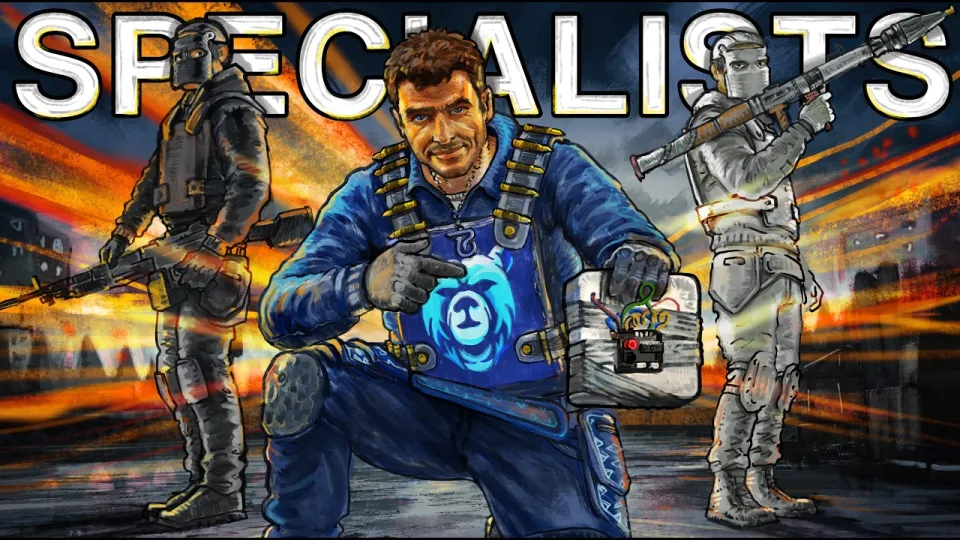
Video: How a 40,000-Hour Trio CONTROLS a SERVER - Rust
Want articles like this for your own video to promote it on YouTube and Google? Order them through the Telegram bot @sat_sit_bot. The bot writes and publishes the articles itself (with your YouTube video embedded) on popular topical websites (no ads). Try it free: 50 articles on us.
· based on the channel Blooprint
Key takeaways
- Blooprint's trio is Blooprint, Disfigure and Nine, with roughly 40,000 combined hours of Rust experience.
- The wipe began without big ambitions on a 500+ population server and escalated into server-wide dominance.
- The trio moved from early gearing to roaming with top-tier weapons like the M2 and L9.
- Raiding all competition became the endgame, including online raids on rival groups.
- Blooprint streams live at twitch.tv/blooprint and posts full wipe movies on his YouTube channel.
A 40,000-hour trio controls a Rust server by compressing years of individual experience into a single shared plan: three players who each know every monument, recoil pattern and raid cost split roles, share loot instantly and escalate from a quiet start to raiding every competitor on a 500+ population server. That is the arc Blooprint, Disfigure and Nine follow in the wipe documented in «How a 40,000-Hour Trio CONTROLS a SERVER - Rust», and you can watch the same trio live on Blooprint's Twitch channel.
What 40,000 hours actually buys a Rust trio
Experience in Rust is not one skill but a stack of them, and a trio that has played for tens of thousands of hours combined spreads those skills across three bodies. One player reads the map and the economy, another leads fights, the third handles building and raid math. When all three can do all three jobs, the group never stalls waiting for a specialist.
The practical payoff shows up in small decisions that compound over a wipe:
- Faster starts. Knowing which monuments pay out first and which routes avoid traffic turns the first hour into a full kit instead of a scrap run.
- Cleaner fights. Recoil control and crosshair placement built over thousands of hours mean the trio wins 3v3s and often 2v3s without losing gear.
- Better trades. Experienced players know when a fight is worth taking and when walking away preserves more value than a kill.
- Instant looting discipline. Loot is split by role in seconds, so nobody carries the group's only rocket launcher into a bad roam.
Blooprint's channel is built on exactly this kind of long-form wipe storytelling: the video is not a highlight reel but a compressed record of how a group turns small advantages into map-wide pressure. Viewers who have never installed Rust still follow the arc, which is why comments on the video repeatedly describe living entire wipes through the narrative rather than through the game itself.
How the wipe escalates from a quiet start to server control
A wipe that ends in dominance rarely begins with a plan for dominance; it begins with efficiency. The trio's stated starting point was modest, and the escalation came from refusing to waste time on low-value activities once the group was geared. On a high-population server, that means converting every successful fight into a base upgrade and every base upgrade into raid capability.
The escalation typically follows a recognizable ladder:
- Primitive phase: fast monument control, early furnaces, and a starter base placed for expansion rather than comfort.
- Gear phase: farming components for weapons and armor while contesting the same monuments as rival groups.
- Roam phase: moving as a three-man unit with top-tier kits, taking fights on the trio's terms and denying rivals the chance to snowball.
- Raid phase: turning stockpiled explosives into structure damage, removing competitors one base at a time.
On a server with hundreds of concurrent players, the third and fourth phases feed each other. Every successful roam funds the next raid, and every raid removes a group that could otherwise contest monuments. The trio does not need to fight the whole server at once; it needs to fight the right group at the right time, repeatedly.
Gear, roams and the M2 question
One detail viewers latched onto is the return of high-tier roaming: the trio moving out with an M2 and an L9 rather than hoarding them behind base walls. That choice is the clearest expression of server control, because top-tier weapons only generate value when they are in the field.
Gear fear is the default behavior on most servers. Groups farm a rocket launcher or a military-grade rifle, store it, and lose it anyway when the base eventually falls. A trio confident in its aim and its rotations treats expensive kits as tools with an expected lifespan, not trophies. The math is simple: a weapon that kills three geared players pays for itself, and a weapon that sits in a box pays nothing.
That confidence is also what makes the content work. Roams with expensive kits create the risk that keeps viewers watching, and the video's most-discussed moments come from fights that could have gone either way. The trio's advantage is not that it never loses gear; it is that it re-gears faster than rivals can exploit a loss.
Raiding every competitor and handling the online raid
Raiding is where a strong trio becomes a server-wide problem. Once a group can craft and deploy explosives at scale, the constraint shifts from resources to targets, and the trio's target list becomes the competition itself rather than random bases.
Three things separate a controlled raid campaign from expensive noise:
- Target selection. Rival clans with active members and good loot are worth the explosives; empty bases and solo shacks are not.
- Scouting. Knowing a base's layout, door count and online status before the first charge prevents wasted C4 and awkward breaches.
- Defense during the raid. An online raid is a PvP fight with a timer, so the trio keeps one player watching approaches while the others blow through walls.
Comments on the video show that the online raids are the part viewers remember, including one rival joking about eating faster to mount a better defense. That is the signature of a wipe where the trio set the pace: opponents are reacting to the trio's schedule, not the other way around. The clip of a horse launching a mini into the air is the comic relief that long-form Rust movies need, but the raids are the substance.
Reading the wipe like a Rust player
A 40,000-hour trio is not unbeatable, and treating the video as proof otherwise misses what makes it instructive. What the wipe demonstrates is process: consistent farming routes, disciplined kit usage, shared information and a willingness to escalate before rivals are ready.
Players who want to copy the pattern should focus on the boring parts first. Group your base so loot splits are fast. Decide who calls rotations before the fight starts. Keep expensive kits moving instead of stored. When the group is ready, raid the groups that can actually threaten you, not the easiest targets on the map. Server control is a byproduct of those habits repeated for hours, not a single lucky raid.
Viewers also raised fair questions about how the trio's opponents seemed to sharpen up suddenly during fights. In Rust, that is usually a mix of better positioning, third-party interference and the simple fact that losing a base makes players desperate, not evidence of anything more. The video does not claim otherwise, and the wipe's story holds up as a case study in pressure rather than a mystery.
Useful links
- Blooprint on Twitch — live streams of fresh wipes and raids.
- Blooprint on Kick — alternative streaming platform.
- Blooprint on TikTok — short clips and highlights.
- Blooprint on Twitter — wipe announcements and updates.
- Blooprint's Discord — community chat and server talk.
Final takeaway
«How a 40,000-Hour Trio CONTROLS a SERVER - Rust» works because it shows server control as a process rather than a flex: three experienced players, a modest start, fast escalation and a raid list made of competitors. The trio of Blooprint, Disfigure and Nine turns hours of accumulated knowledge into tempo, and tempo into map pressure. Channel «Blooprint» is the author of this breakdown, and the full wipe is the best place to see the pattern play out. If you want to catch the next one live, follow Blooprint on Twitch and watch the escalation from the first monument to the last raid.
Questions & answers
Who are the three players in Blooprint's 40,000-hour trio?
The trio is Blooprint, Disfigure and Nine, three Rust creators with tens of thousands of combined hours. Each of them can farm, fight and raid, which is why the group never waits on a specialist. Their roles shift depending on the fight rather than being fixed.
Why do experienced Rust players roam with M2s and L9s instead of storing them?
High-tier weapons only produce value in the field, and a stored weapon is usually lost anyway when a base falls. A confident trio treats expensive kits as tools with an expected lifespan, because one good fight can pay for the whole kit. Gear fear is what keeps most groups from ever converting their stockpile into map pressure.
What does it take to control a 500+ population Rust server as a trio?
It takes tempo more than raw skill: fast early monument control, disciplined loot splitting, and raiding rivals before they can snowball. The trio escalates from starter base to geared roams to a raid campaign against competitors. Every successful fight funds the next raid, and every raid removes a group that could contest resources.
Do you need to play Rust to enjoy these wipe movies?
No. The videos are structured as stories with a clear arc, so viewers who have never installed Rust still follow the escalation and the raids. Many commenters describe experiencing whole wipes through the narrative alone. Knowing the game adds context to decisions like kit choice and raid targeting, but it is not required.
Source: How a 40,000-Hour Trio CONTROLS a SERVER - Rust · Markdown version